
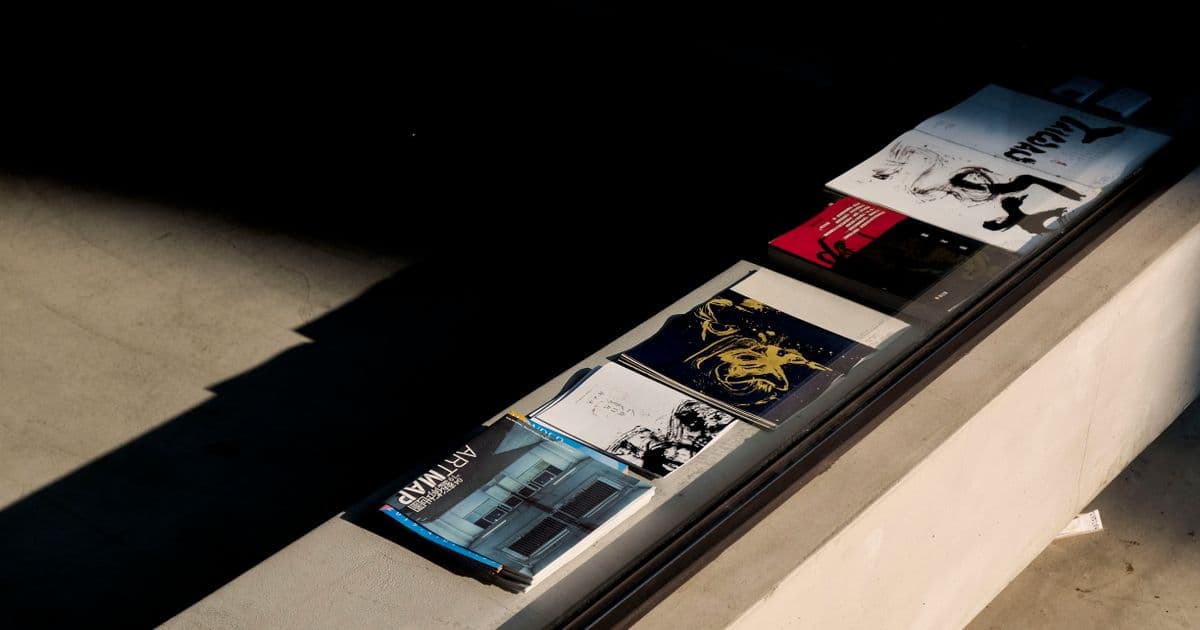
Your portfolio is the only part of your application anyone reads carefully. In design hiring it outranks your CV, your certificates and your interview manner combined — and in Kenya, where a great many designers are self-taught and qualifications vary wildly, it is very often the entire basis of the decision.
Most portfolios fail in the first thirty seconds, and almost always for the same three reasons.
Why portfolios get rejected
1. Too much, unevenly
Thirty pieces of which eight are strong reads worse than the eight alone. A reviewer forms an impression from the weakest item they see, not the best. Everything you are unsure about should come out.
2. No explanation
A grid of images shows that you can operate software. It says nothing about whether you can solve a problem, which is what you are being hired for. Work without context is decoration.
3. No focus
A logo, a wedding poster, a T-shirt, a birthday card and a website mock-up tell a reviewer you will take anything. If you want brand work, show brand work.
What reviewers are actually asking
- Can this person solve a problem? Shown by the thinking, not the artwork.
- Can they work to a brief? Shown by constraints you name and respect.
- Is the craft good? Spacing, type, alignment, consistency.
- Can they explain themselves? Half of a design job is defending decisions to a client.
- Will they finish? Shown by projects that are complete rather than clever fragments.
How many pieces
Six to ten, with three of them written up in depth. Fewer than six looks thin. More than twelve dilutes. If you have thirty, you have a folder, not a portfolio — the editing is the work.
The structure that works for each piece
- The problem. Two or three sentences. Who needed what, and why the existing situation was not working.
- The constraints. Budget, timeline, printing method, brand rules, whatever was real.
- The process. Sketches, options, the direction you rejected and why. Reviewers read this part most closely.
- The outcome. Final work, shown properly and in context.
- The result. What changed. If nothing was measured, say what you would measure.
How to Build A Portfolio covers this in 16 lessons, including how to photograph and present physical work.
Building one with no clients
Nobody can tell whether a project was commissioned. They can tell whether it was thought about.
Redesign real local businesses
Pick businesses near you with genuinely poor materials — and there are many. A butchery with an unreadable price list, a salon with a blurry sign, a school with a badly typeset newsletter, a matatu SACCO with no visual identity at all. Redesign properly, show the original alongside your version, and explain the reasoning. This demonstrates two things at once: craft, and understanding of the Kenyan market you would be working in.
Invent a brief and honour it
Write a real brief before you start — audience, budget, where it will appear, what success looks like — and then design against it. Do not adjust the brief to flatter the outcome; the discipline is the point.
Do the unglamorous work
Everyone shows logos. Very few show a well-set annual report, a menu that works at arm's length, or a signage system. Layout skill, from InDesign, is scarce in Kenya and immediately visible to anyone who knows what they are looking at.
Label speculative work honestly
Mark it "concept" or "self-initiated". Reviewers respect it; being caught implying a client relationship that never existed ends the conversation.
Where to host it, free
- Behance. The default for designers, built for case studies, free, and searched by recruiters.
- Instagram. Not a portfolio, but genuinely where many Kenyan clients look first. Keep the grid consistent and put the real link in your bio.
- A PDF. Still necessary. Many Kenyan employers ask for one by email. Keep it under 10MB or it will not arrive.
- Your own site. The strongest signal, and you can build it yourself — HTML and CSS, or Elementor if you would rather not code.
Have all four, pointing at the same work.
Presentation details that change the impression
- Use mock-ups. A poster shown on a wall reads as real. The same poster as a flat JPEG reads as homework.
- Be consistent. One background, one caption style, one image size throughout.
- Lead and close strong. First and last pieces are the ones remembered.
- Proofread. A typo in a designer's own portfolio is the loudest possible signal about attention to detail.
- Check it on a phone. Most first views happen there.
Keep it moving
Review it every three months. Add what is strong, remove what has been outgrown. A portfolio that has not changed in two years suggests a designer who has not either.
Start with How to Build A Portfolio, and shore up the craft with Graphic Design Foundations. Both free, both with a verifiable certificate — create an account to begin.